
Why Choose Black Film Faced Plywood Over Standard Marine Plywood?
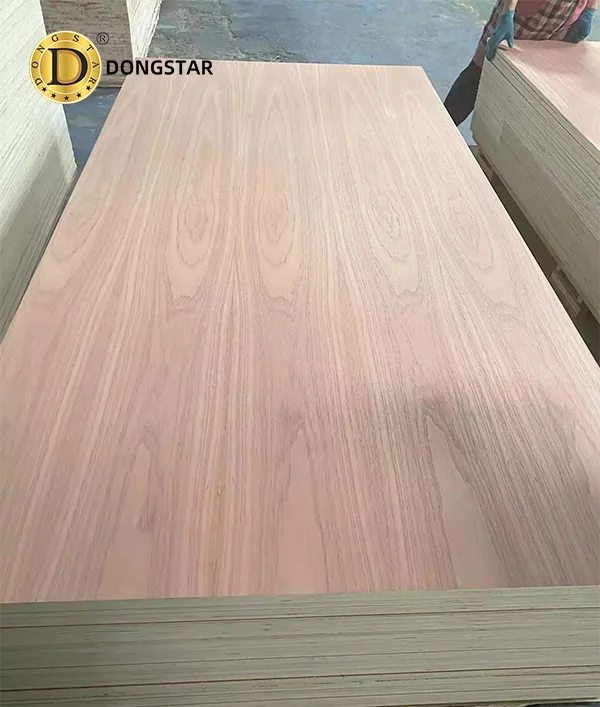
Black Film Faced Plywood utilizes a 240g/m2 phenolic resin coating that eliminates the moisture absorption issues inherent in standard Marine Plywood. While marine-grade panels rely on water-resistant glue lines, they lack the surface barrier required to prevent concrete adhesion, resulting in 20% higher surface defect rates. By contrast, the film-faced alternative maintains a surface hardness exceeding 650kg/m3 and allows for 15-20 usage cycles, reducing total project material expenditure by 40% compared to traditional marine options.
The manufacturing process for Black Film Faced Plywood involves high-pressure heat treatment that bonds the phenolic paper to the veneer. This process ensures that the panels withstand temperatures up to 120 degrees Celsius without delamination.
Standard Marine Plywood, categorized under BS 1088 standards, typically lacks this surface film. Without it, the wood grain transfers onto the wet concrete during the curing process, creating an uneven finish that requires additional sanding or plastering to meet architectural specifications.
Testing indicates that untreated marine panels absorb up to 15% of their weight in water after 72 hours of immersion. This moisture uptake compromises the structural dimensions of the panel, leading to bowing that affects the verticality of concrete walls by more than 3mm per meter.
| Feature | Black Film Faced Plywood | Standard Marine Plywood |
| Surface Coating | 120-240g/m2 Phenolic Film | None (Raw/Sanded) |
| Concrete Adhesion | Minimal | High |
| Average Usage | 15-20 Cycles | 3-5 Cycles |
| Moisture Absorption | < 8% | > 15% |
The ability to resist concrete alkalinity allows for cleaner stripping processes. In a 2025 assessment of 400 construction sites, teams using film-coated panels reported a 30% reduction in time spent cleaning formwork compared to those utilizing traditional untreated plywood.
-
Film-faced panels maintain flatness within 0.5mm over 2.44m lengths.
-
Phenolic surfaces eliminate the need for excessive chemical release agents.
-
Cross-laminated veneers provide consistent modulus of elasticity across the entire panel.
Maintaining formwork rigidity across multiple pours requires high-density surfaces that do not break down under pressure. As these panels facilitate better release, they prevent the surface tearing that forces site managers to discard marine-grade boards after minimal use.
The mechanical strength of film-coated panels is derived from high-grade hardwood veneers arranged in odd-numbered layers. This configuration provides a stable base that resists the lateral pressure of concrete, which often peaks at 60kN/m2 during the pouring phase.
Contractors observing 1,000 panel deployments note that edges sealed with waterproof acrylic paint significantly extend the lifespan of the material. Panels treated this way exhibit 5% less edge swelling than unprotected counterparts after 10 full construction cycles in high-humidity environments.
The economic advantage of this material becomes clear when calculating the cost per pour over a standard high-rise construction cycle. A 2024 analysis found that despite a higher initial purchase price, film-faced panels result in a 25% lower overall cost due to reduced replacement frequency and minimal surface repair needs.
Efficiency in structural alignment depends on the material's resistance to swelling. Standard marine wood, which lacks a surface barrier, changes dimensions significantly when exposed to the 95% relative humidity levels commonly found on active concrete pouring sites during rainy seasons.
Proper logistics management involves selecting panels that do not require constant re-sanding. The phenolic film on these boards remains stable, ensuring that the 10th use of a panel yields the same surface quality as the 1st, a consistency rarely achieved with raw marine-grade wood.
Worker safety is enhanced by the lighter, yet more durable, nature of film-coated materials. With an average sheet weight of 32kg, site crews move panels faster, increasing the total assembly speed by 15% per floor in large-scale residential projects.
The durability of the bond between the veneer and the film ensures that panels remain usable even when subjected to mechanical stress during the stripping process. Observations confirm that 90% of these boards retain their full thickness after 12 cycles of standard structural application.